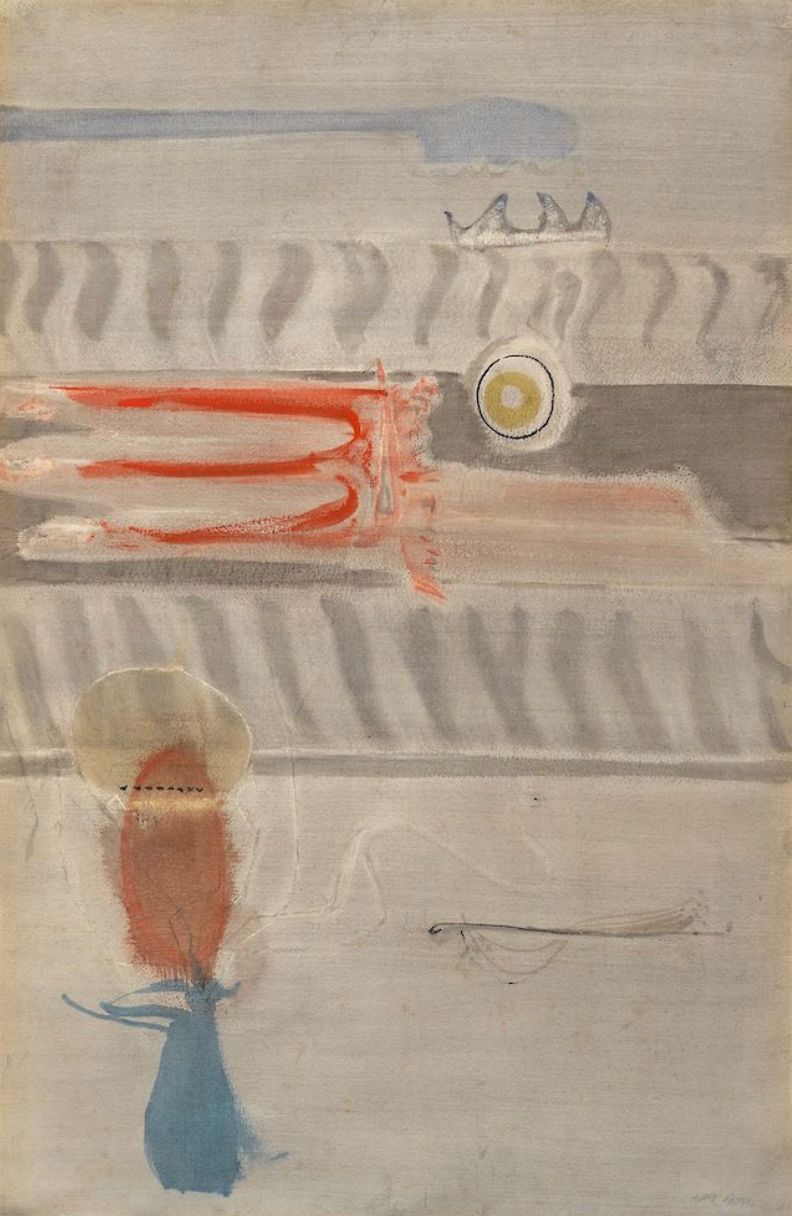
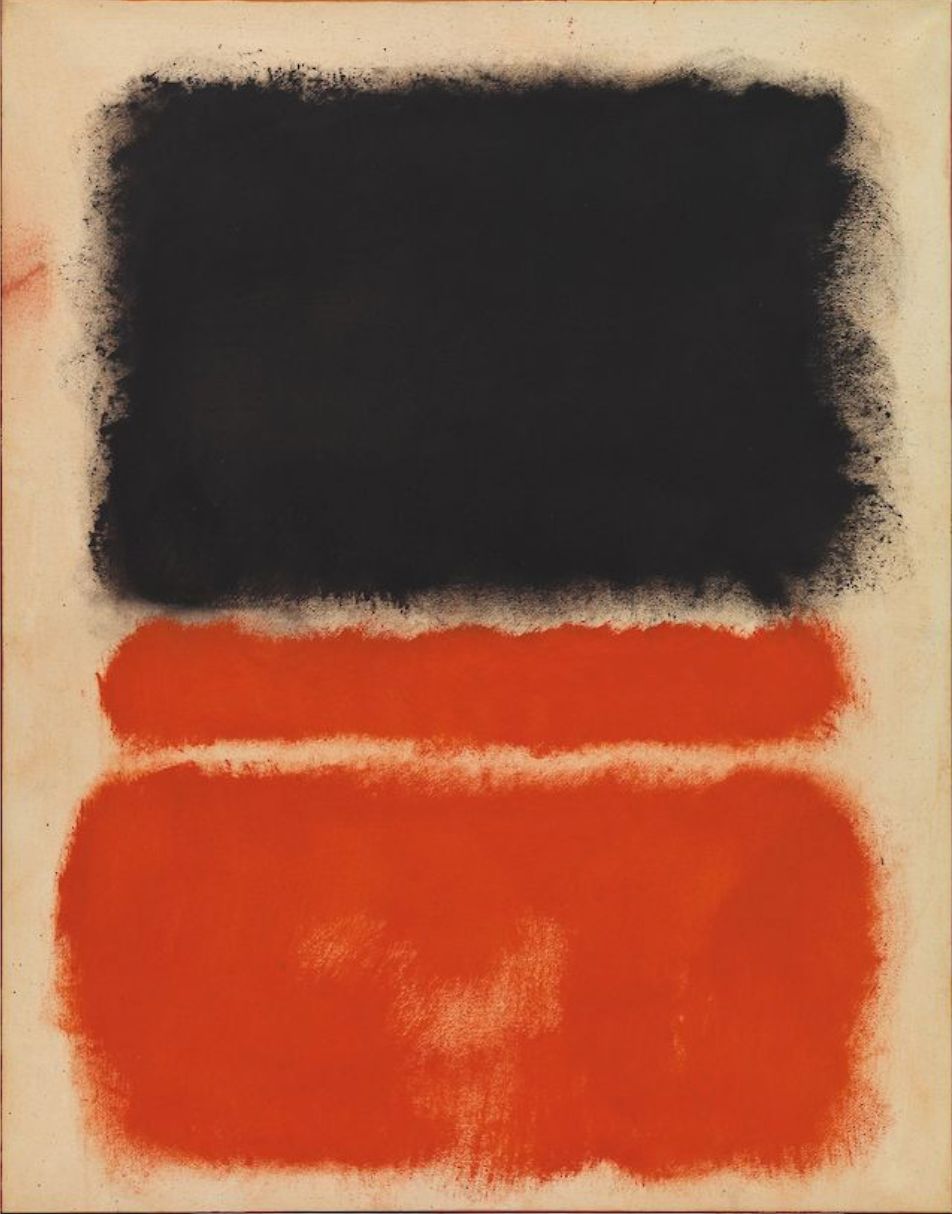


At the end of the 1930s and the beginning of the 1940s, Mark Rothko, along with William Baziotes, Adolph Gottlieb, and Theodoros Stamos, combines mythical themes and primordial figurations to express universal experiences. In the works of this period, evanescent biomorphic forms float in a misty atmosphere; evoking rudimentary life forms, aquatic plants, and primitive creatures, they aim to offer a visual equivalent of subconscious images. Rothko mainly works by drawing on his deep sensations, but he also looks to artists who worked before him: in this work, one can perceive the influence of Joan Miró in the dotted line, the flame, the amorphous character at the bottom left, and the sinuous filiform shapes. Openly representative images are absent, and in this, one can sense the progression towards complete abstraction, typical of Rothko's mature style. In the division into horizontal zones, the nebulous structure, and the indeterminate contours, Sacrifice anticipates his characteristic color field paintings.