Via Giovanni Aldini, 10/12, Florence, Tuscany
Closed now: open at 10:00

Contact the museum

The Villa il Ventaglio Park was originally, in the fifteenth century, an inn with a farm owned by Lippaccio and Giovanni Brancacci: located on the Forbici hill, it offered a resting place for pilgrims traveling from Porta a Pinti to San Domenico di Fiesole.
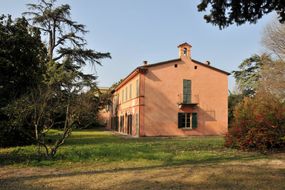
The building first belonged to the Brancacci, then to the Salvetti who transformed it into a House for gentlemen and workers, holding it until the early seventeenth century. Subsequently, the property passed to the Bardi and Usimbardi, then the Company of San Michele became the trustee and leased it to the Torrigiani until the first half of the eighteenth century. Later it belonged to the Cedri, then the Seratti, and afterwards the property passed to Agnese Pecci, who sold it to the Milanese count Giuseppe Archinto in 1824. He commissioned the architect Giuseppe Poggi to renovate and expand the property: the nineteenth-century villa in neoclassical style with stables was built, accessible from via delle Forbici.
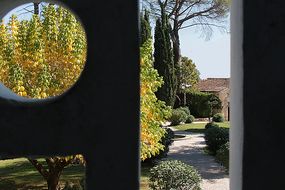
With the collaboration of the gardener and botanist Attilio Pucci, the mulberry and olive farm was transformed into the current romantic park: earthworks lasted until 1856, and then trees (linden, elms, horse chestnuts, hornbeams) were planted, creating views and perspectives through the contrast between the large tree masses and the extensive lawn surfaces.
The Villa il Ventaglio Park, in English style, extends over about five hectares on the hill; internally, a drivable road was built for easier access to the villa, as an alternative to the steep via delle Forbici. Characteristic elements include the romantic pond, with an islet and a little bridge, in the large entrance lawn.

Via Giovanni Aldini, 10/12, Florence, Italy
Opening hours
| opens - closes | last entry | |
| monday | Closed now | |
| tuesday | 10:00 - 18:00 | |
| wednesday | 10:00 - 18:00 | |
| thursday | 10:00 - 18:00 | |
| friday | 10:00 - 18:00 | |
| saturday | 10:00 - 18:00 | |
| sunday | 10:00 - 18:00 |