About
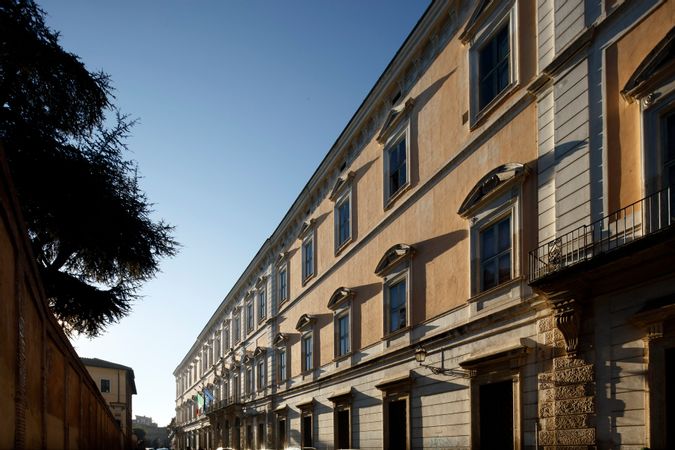
Palazzo Barberini in Rome is a historic building, emblem of Roman Baroque.
Part of the larger institution “Barberini Corsini National Gallery”, the Palace includes a museum and two galleries: Palazzo Barberini and Galleria Corsini.
Palazzo Barberini was originally built as the palace of the Barberini family.
Commissioned by Pope Urban VIII, it was constructed starting from 1625 by the most renowned architects of the seventeenth century: Carlo Maderno, Gian Lorenzo Bernini, and Francesco Borromini, and decorated by artists such as Andrea Sacchi and Pietro da Cortona, who created the extraordinary ceiling in the main hall with the Triumph of Divine Providence.
In the National Galleries of Palazzo Barberini, over 5000 works of art are preserved, including paintings, sculptures, sketches, decorative arts from the 13th to the 18th century. The original core of the National Galleries at Palazzo Barberini was formed in 1883 with the donation to the State of the Corsini collection, then housed at Palazzo Corsini. The collection soon enriched with works from prestigious Roman collections: Chigi, Torlonia, Mattei, Odescalchi, Sciarra.
In 1949, the Italian State acquired Palazzo Barberini from the family's heirs, where in 1953 the new headquarters of the National Gallery was opened, which today exhibits a collection of works from the 13th to the 18th century with absolute masterpieces such as the Annunciation by Filippo Lippi, the Fornarina by Raphael, Judith and Holofernes by Caravaggio.
Artists on show


 +6
Programme and activities
See allGuided tours, exhibitions and events at Barberini Palace will appear here. Follow the museum to get updates.
What to see
See all (26)