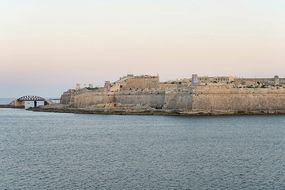
The Venetian walls of Bergamo are an impressive architectural construction dating back to the 16th century, well-preserved as they have not undergone any war events over the centuries. This fortification consists of 14 bastions, 2 floors, 32 sentry boxes (of which only one remains as evidence), 100 openings for cannon mouths, two powder magazines, 4 gates: Sant'Agostino, San Giacomo, undoubtedly the most beautiful and panoramic, Sant'Alessandro and San Lorenzo, the latter also known as Porta Garibaldi. In addition to all this, there is a myriad of military sorties and passages of which, in part, the memory has been lost, such as Porta del Pantano inferiore, dating back to the 13th century, which was a connection to Via Borgo Canale, while the Porta del Pantano superiore, which was the access to the upper part of the Visconti Citadel has disappeared. Externally, the ramparts give the city an appearance of an impregnable fortress, but since they were built in the second half of the 16th century, the rise of the cannon with parabolic trajectory renders them in fact the swan song of this type of military constructions.
Since July 9, 2017, the Venetian walls have become part of UNESCO as a World Heritage Site, in the transnational serial site "Venetian Works of Defense between the 16th and 17th centuries: Stato da Terra-Stato da Mar occidentale".

Viale delle Mura, Bergamo, Italy
Opening hours
| opens - closes | last entry | |
| monday | Closed now | |
| tuesday | Closed now | |
| wednesday | Closed now | |
| thursday | Closed now | |
| friday | Closed now | |
| saturday | Closed now | |
| sunday | Closed now |