From 24 September to 11 January 2026


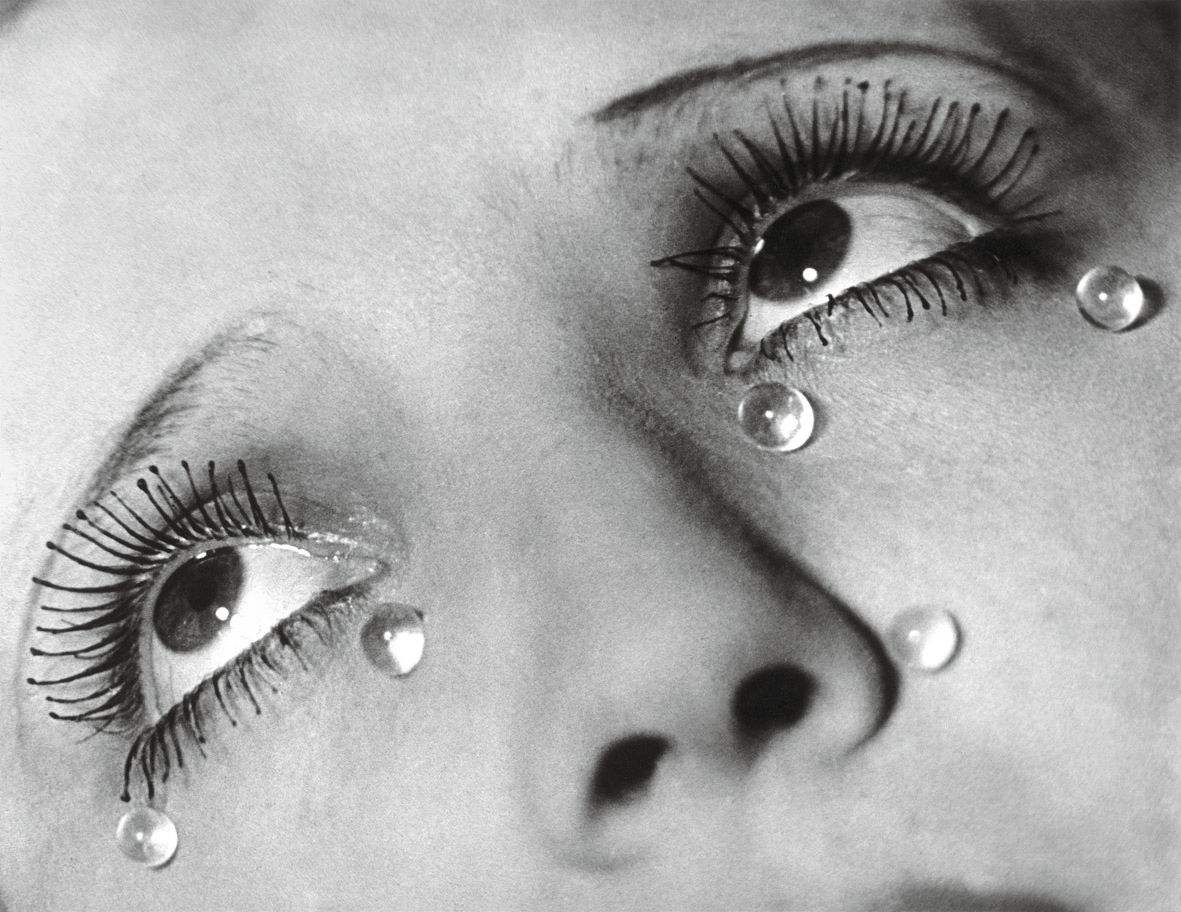
Palazzo Reale presents "Man Ray. Forms of Light," a major retrospective dedicated to one of the absolute protagonists of 20th-century art, a brilliant pioneer of visual languages that continue to influence art, photography, design, and contemporary culture. His images, permeated with irony, elegance, provocation, and freedom, remain extremely current and testify to the fundamental role that Man Ray played in redefining the boundaries of art in the last century.
The exhibition, promoted by the Municipality of Milan - Culture and produced by Palazzo Reale and Silvana Editoriale, is curated by Pierre-Yves Butzbach and Robert Rocca and will be open to the public from September 24, 2025, until January 11, 2026.
Painter, photographer, director, and innovator, Man Ray (Philadelphia, 1890 - Paris, 1976) was a central figure in the avant-garde movements of the 20th century. Born Emmanuel Radnitsky to a Jewish family of Russian origin, he adopted the pseudonym "Man Ray" - a combination of "Man" (man) and "Ray" (ray of light) - thus marking the beginning of a life and career deeply devoted to artistic experimentation. Formed in the vibrant environment of early 20th-century American art, his artistic personality developed through contact with European avant-gardes and decisive figures such as Marcel Duchamp, who introduced him to radically new artistic languages. From the beginning, Man Ray combined painting and drawing with the assembly of objects and the use of photography, initially to document his works and those of his friends, and soon as an autonomous creative medium.
In 1921, he moved to Paris, where he became involved with the surrealist group led by André Breton and established relationships with Louis Aragon, Philippe Soupault, Paul Éluard, and Robert Desnos. In Montparnasse, he met Alice Prin, known as Kiki de Montparnasse, a singer and model who became the artist's companion: together they created a series of images that would become icons in the history of photography, including Le Violon d'Ingres and Noire et blanche. Kiki also appeared in three films directed by Man Ray: Le Retour à la raison (1923), Emak Bakia (1926), and L'Étoile de mer (1928). It was during these years that the artist refined some of his most innovative techniques, such as rayography, a process that involves exposing objects directly onto photosensitive paper without the use of a camera. Coined by Tristan Tzara, the term perfectly expresses the idea of a composition created with light, blending experimentation and poetry. In the late 1920s, with the photographer Lee Miller - his new companion and muse - he developed the technique of solarization, in which the outlines of the images take on a luminous and ghostly aura, achieved through partial exposure to light during development.

piazza Duomo, 12, Milan, Italy
Opening hours
| opens - closes | last entry | |
| monday | Closed now | |
| tuesday | 10:00 - 19:30 | 18:30 |
| wednesday | 10:00 - 19:30 | 18:30 |
| thursday | 10:00 - 22:30 | 21:30 |
| friday | 10:00 - 19:30 | 18:30 |
| saturday | 10:00 - 19:30 | 18:30 |
| sunday | 10:00 - 19:30 | 18:30 |
From 21 July to 1 November 2026
Rebel Muses. Women, image, power in the history of art
Former Church of Santo Stefano, Mondovì