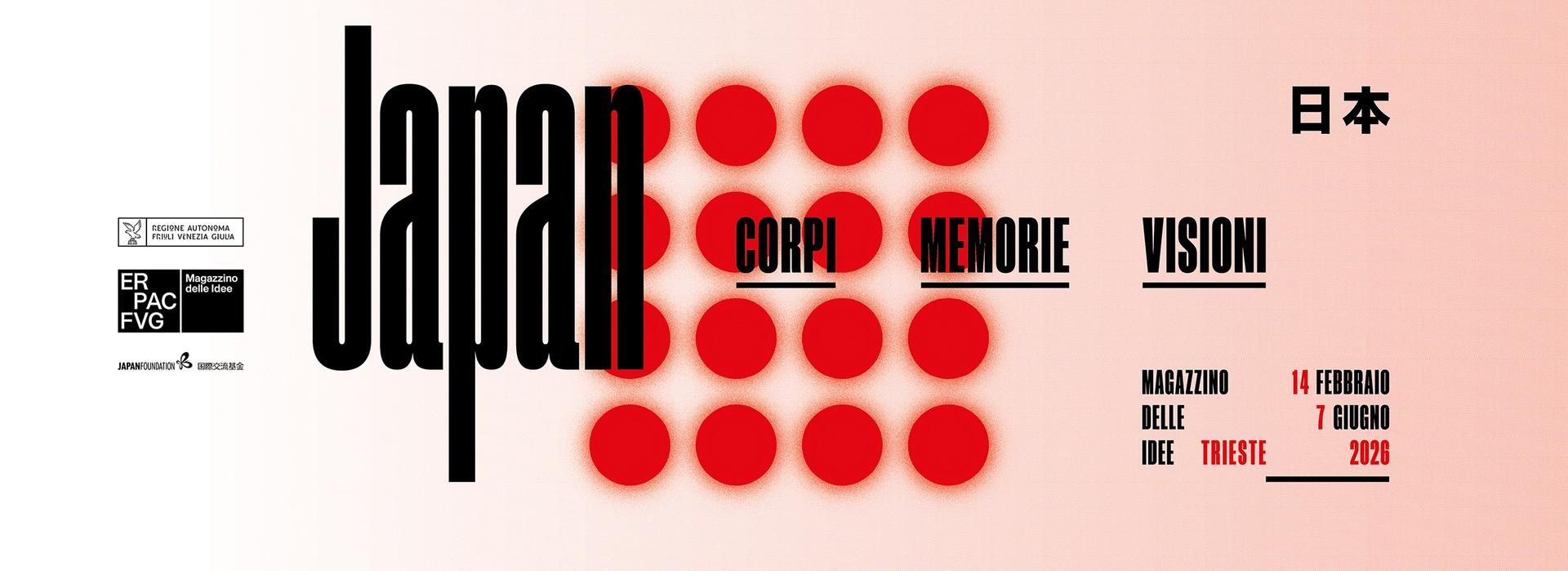
From 14 February to 7 June 2026



Warehouse of Ideas
Corso Camillo Benso Conte di Cavour n.2, Trieste
Closed now: open at 09:00
Verified profile
The Warehouse of Ideas in Trieste presents, from February 14 to June 7, 2026, the exhibition JAPAN. Bodies, memories, visions produced and organized by ERPAC - Regional Authority for Cultural Heritage of Friuli Venezia Giulia and curated by Filippo Maggia and Guido Comis.
The exhibition in Trieste aims to gather around three themes - Memory and Identity, Body and Bodies, Reality and Vision - a core of works by contemporary Japanese artists who, through the use of images, offer a broad overview of the current Japanese photographic and video scene, from dialogue with the masters to the research of the new generations committed to reinterpreting the recent history of Japan, questioning gender issues, daily life, and sometimes using the body as a political tool.
Indeed, while Japanese photography of the 20th century was long characterized by a strongly identity-oriented and self-referential language, today we are witnessing a significant change in direction: many young and established artists not only refer to the complexity of their own country, but also to global changes, engaging in a close dialogue with Western themes such as gender issues, collective memory, social relationships, the environment, and the perception of the image.
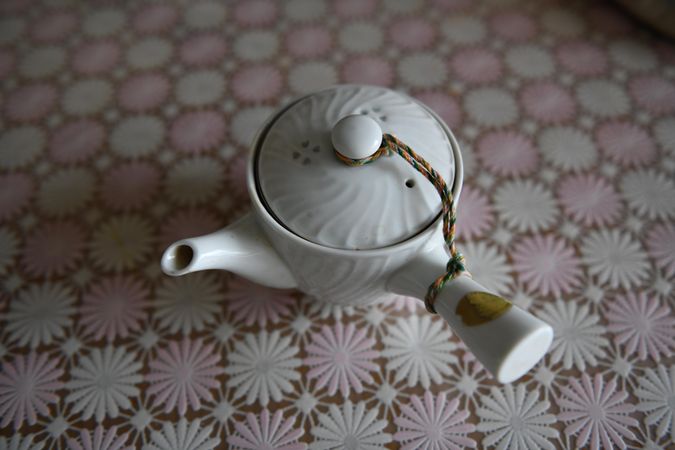
The gazes of Noriko Hayashi and Tomoko Yoneda reinterpret crucial periods and events in recent Japanese history through a documentary and participatory approach. Susumu Shimonishi, with an overhead shot and a moving image that becomes a measure of time, reflects on the continuity and fractures of the past. The daily life of the Okunoto peninsula - still suspended between tradition and marginality - is at the center of the works of Naoki Ishikawa, a student of Moriyama. The celebrations and rituals that define the cultural fabric of the country emerge in the photographs of Keijiro Kai, while the videos of Miyagi Futoshi explore personal memory and the construction of gender identity, through an intimate narrative of memories and relationships.
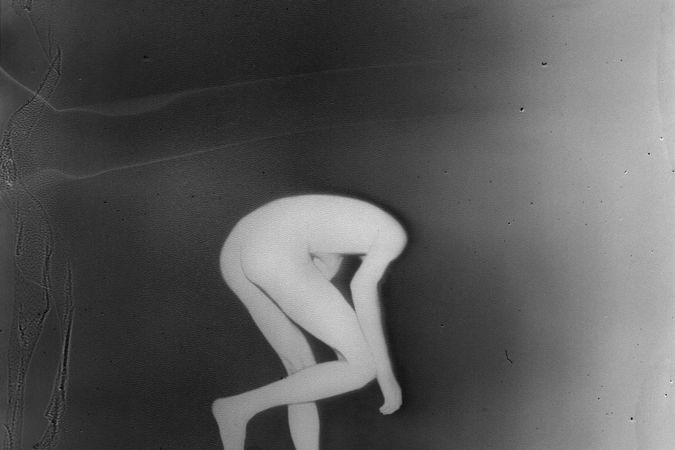
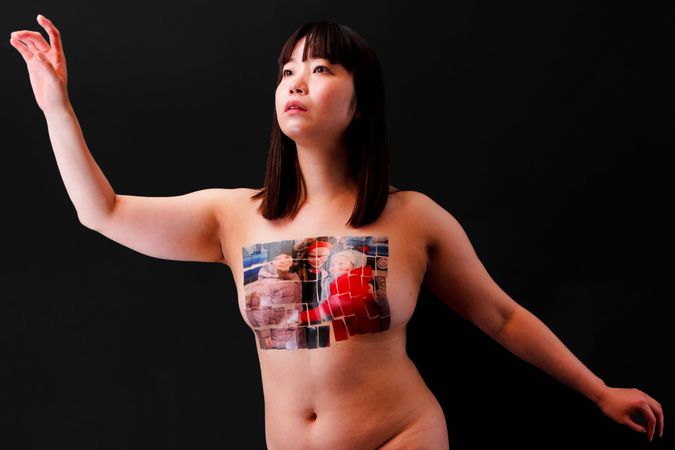
A second section is dedicated to the body. Body as a social space, as a political place, as living matter that responds to contemporary changes. Aya Momose works on the distance - and sometimes on the misunderstanding - between Eastern and Western visual codes. Yurie Nagashima captures the delicacy of everyday family life, while Ryoko Suzuki directly addresses the themes of violence and social pressure on women. The photographs of Sakiko Nomura, for years an assistant to Araki, tell through male nudes an existential shyness that seems filtered through the dispersing rhythm of Tokyo, immense and impersonal.
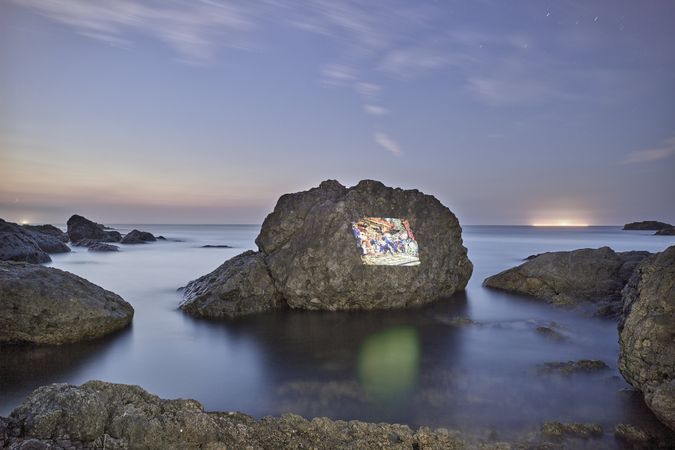
In the Reality and Vision section, the dialogue between what we see and what we imagine runs through the works of Hiroshi Sugimoto, a master in making time tangible material. His essential and meditative images are juxtaposed with the luminous scenographies of Tokihiro Sato, constructed with technical interventions that transform photography into a narrative space. The grand visions of Risaku Suzuki emerge from the forest like suspended paintings, while Daisuke Yokota dissolves outlines and references in evanescent images. In the work of Rinko Kawauchi, reality becomes an emotional stage, where sensations, rather than subjects, emerge. Yoko Asakai finally invites the viewer to "step through the screen," transforming the flow of video images into an experience that seems to sprout within the gaze.

Corso Camillo Benso Conte di Cavour n.2, Trieste, Italy
Opening hours
| opens - closes | last entry | |
| monday | 09:00 - 19:00 | 18:30 |
| tuesday | 09:00 - 19:00 | 18:30 |
| wednesday | 09:00 - 19:00 | 18:30 |
| thursday | 09:00 - 19:00 | 18:30 |
| friday | 09:00 - 19:00 | 18:30 |
| saturday | 09:00 - 19:00 | 18:30 |
| sunday | 09:00 - 19:00 | 18:30 |
OPEN ONLY DURING EXHIBITIONS