From 13 March to 5 July 2026


Wiersch's practice engages with popular culture, cinema, television, and the imaginaries of history, filtered through her perspective as an artist born in Germany of Amazigh and Arab descent. Moving between autobiography and fiction, her work raises questions about national and cultural belonging from a post-migrant perspective, staging history as an unstable field of projection, evidence, and role-playing. The core of her production consists of puppet-like figures that the artist reactivates and reformulates iteratively into a multitude of characters drawn from pop culture, history, or her own life experience.
Atlas Studios takes its cue from Wiersch's research on the figure of Hannibal, the Carthaginian general who unsuccessfully tried to conquer Rome, and on the ways in which cinema has represented him and the history of the Roman Empire. Hannibal also refers to the residential complex of the Seventies in Dortmund-Dorstfeld where the artist grew up, called Hannibal II. The convergence of these two stories constitutes the starting point to retrace Hannibal's route through the Alps as well as through the persistent mythologies of ancient imperialism, allowing him, in a sense, to finally reach his destination.
The exhibition transforms Villa Maraini into a series of cinematic backstages inspired by the Atlas Studios in Ouarzazate, Morocco, where since the Eighties countless international film productions have staged their visions of antiquity, empire, and exoticism. The exhibition unfolds as a sequence of environments that evoke the apparatus of filmmaking - sets, costumes, lights, and rehearsal spaces - while also revealing the mechanisms through which history is constructed, represented, and perpetuated over time.
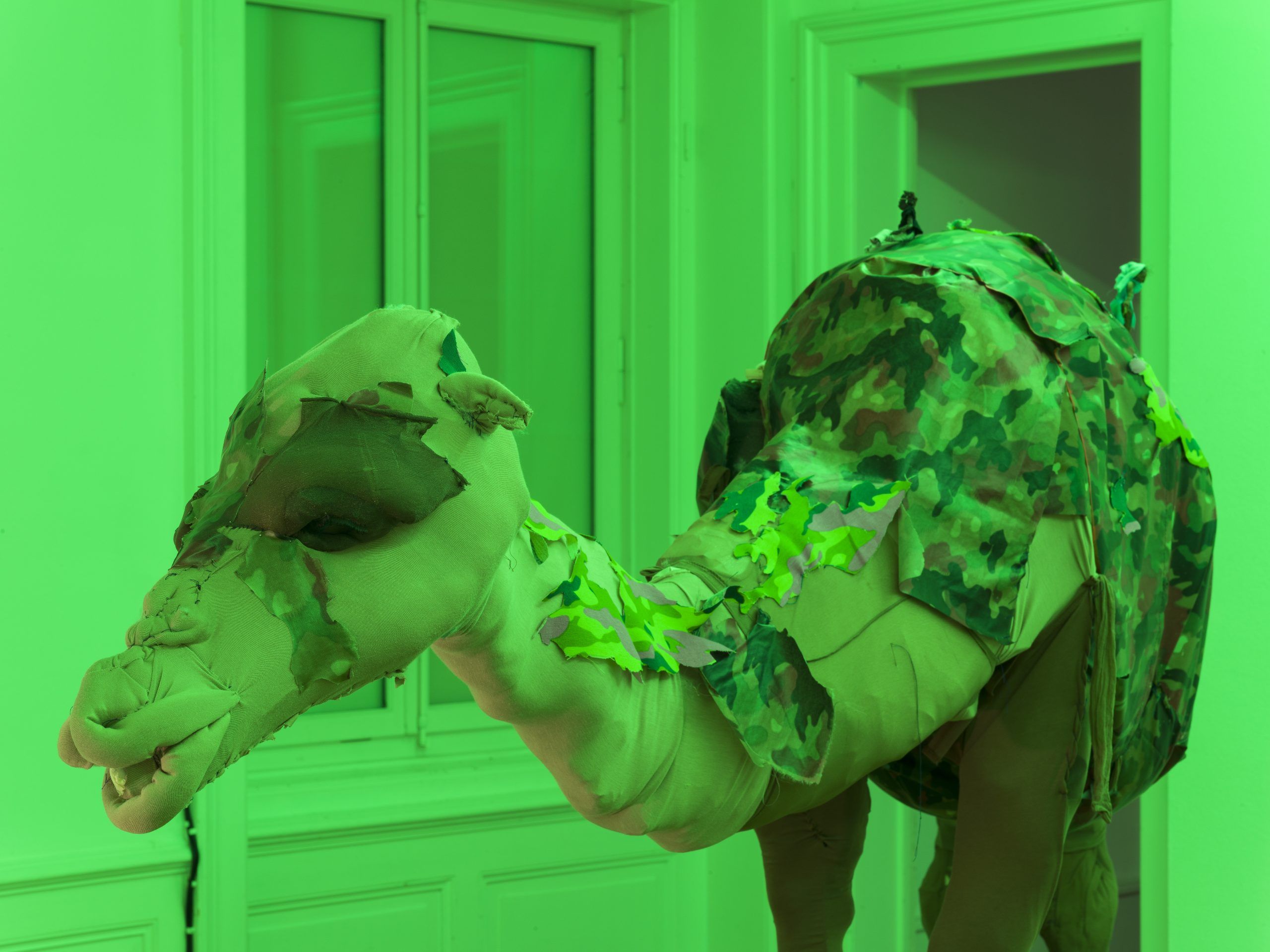
At the center of the exhibition are Wiersch's protagonists: doll-like figures embodying hybrid and unstable identities. Neither fully animated nor inanimate, these characters bear the marks of migration, trauma, and conflict. Placed within constructed scenographies, they oscillate between historical figures, hired actors, and exhibition visitors: as we move through the rooms of the villa, we can encounter the legendary Amazigh queen Kahina, a worker intent on repainting the building's frescoes, or Gertrude Bell and her camel, freely reminiscent of Nicole Kidman in Queen of the Desert. Confronting the gaze of the spectator, these presences refer to inherited narratives on power and otherness, revealing how identities are continuously produced through repetition, performance, and institutional frameworks.

Via Ludovisi, 48, Rome, Italy
Opening hours
| opens - closes | last entry | |
| monday | Closed now | |
| tuesday | Closed now | |
| wednesday | 14:30 - 18:30 | |
| thursday | 14:30 - 20:00 | |
| friday | 14:30 - 18:30 | |
| saturday | 11:00 - 18:30 | |
| sunday | 11:00 - 18:30 |
Guided tours Monday 3.00pm, 4.00pm
By reservation only (Italian, German and English)
Rate: €5 per person
Visiting the tower is not permitted.
From 21 June to 20 December 2026
ANTONIO BARRESE: MORPHOLOGIES OF LIGHT
Marcello Morandini Foundation, Varese
From 20 September to 21 October 2026
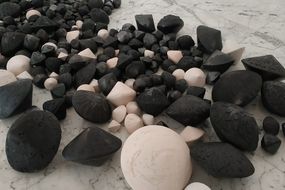
Caterina Lai - Traces of earth and wind
Museum of Organic Environmental Art, Tempio Pausania