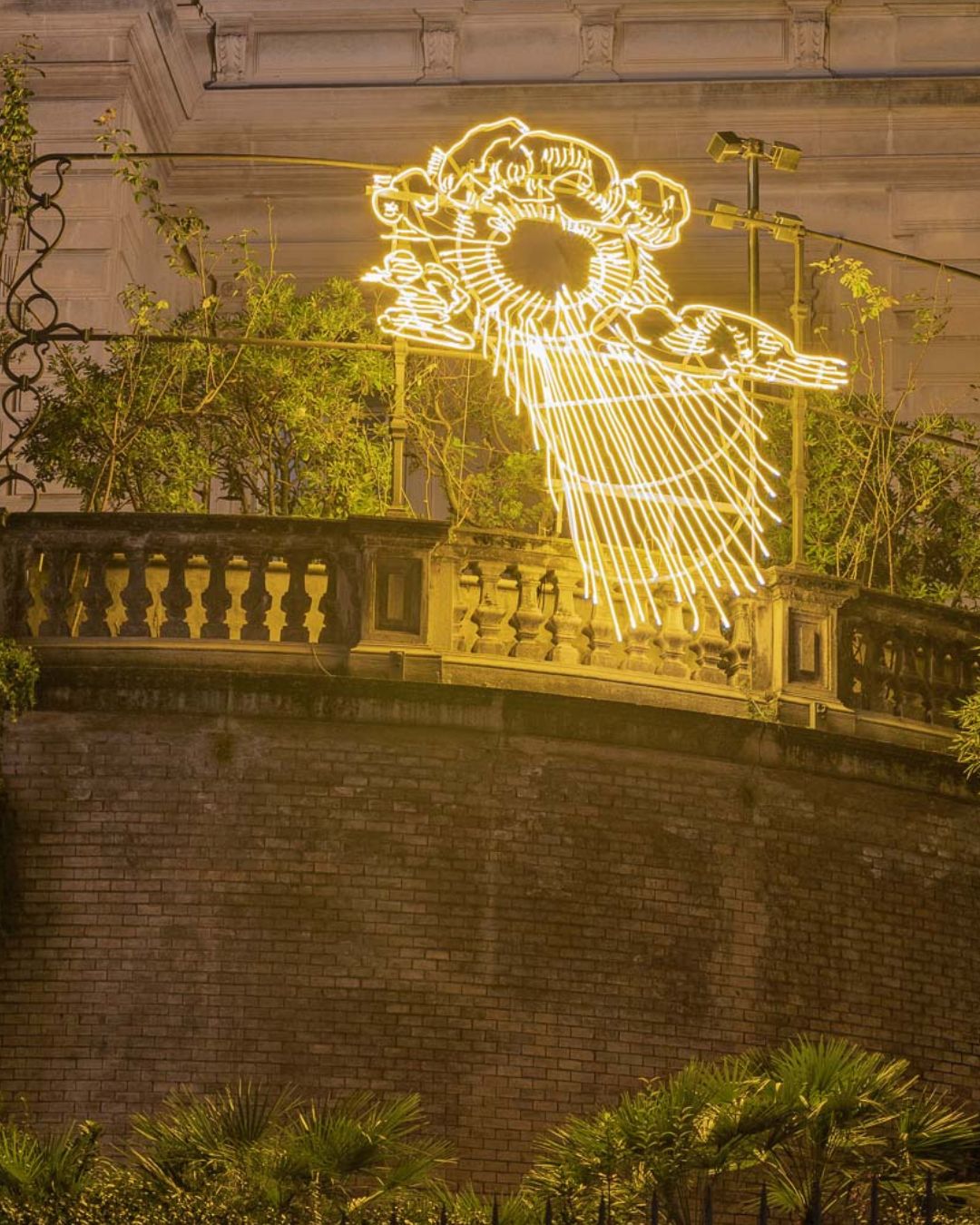
From 19 December to 1 January 2027


TAFAA – SIGNAL (SPIN AN EMPTY VESSEL, THIS IS FINE) (2025) is a new neon artwork commissioned to Chloé Delarue, created for the facade of the Swiss Institute. The artwork is part of TAFAA (Toward A Fully Automated Appearance), an ongoing research project that investigates how automation, digital systems, and technological infrastructures shape perception, affectivity, and embodiment.
The design originates from a Renaissance emblem book - collections of motifs produced for reproduction and reuse, born when printing allowed the circulation of images on a large scale. By reactivating this symbol, Delarue sheds light on an unexpected genealogy of contemporary image production, connecting motifs from the 16th century to memes: brief and mobile forms, whose power lies not so much in meaning but in the ability to circulate, transform, and be continuously reappropriated.
Traditionally associated with the divine, the representation of power, or the promise of revelation or ecstasy, here the sun is detached from any religious, political, or cosmological referent. Saturated by centuries of use in divergent contexts, it paradoxically becomes emptied of a stable meaning. Through repetition and overexposure, the symbol is consumed and made available again as a form that persists not for what it means, but for its ability to reappear.
This condition resonates with the material reality of the sun: a form that appears continuous and stable, but never identical to itself. It exists only through an incessant flow of photons, each unique and without duration, producing the illusion of permanence through constant recomposition. Delarue uses this tension between apparent continuity and underlying instability to reflect on the regimes of contemporary image, where forms survive as repetitions without origin - generated, recombined, and transformed through processes that are neither active nor fully autonomous.
When illuminated, TAFAA – SIGNAL (SPIN AN EMPTY VESSEL, THIS IS FINE) reactivates the affective charge of an archetype, showing how contemporary visual culture - accelerated, saturated, and largely devoid of memory - continues to rely on ancient matrices. The use of neon intensifies this logic: light does not carry meaning in itself, but produces presence without narration. Appearing continuous, neon is actually the result of an unstable discharge that reassembles endlessly. It does not illustrate; it emits. In this transition from symbol to signal, the sun no longer asserts authority or beliefs. It becomes an open structure of appearance - an empty form - through which the continuous circulation, exhaustion, and rebirth of forms in the digital present becomes visible.

Via Ludovisi, 48, Rome, Italy
Opening hours
| opens - closes | last entry | |
| monday | Closed now | |
| tuesday | Closed now | |
| wednesday | 14:30 - 18:30 | |
| thursday | 14:30 - 20:00 | |
| friday | 14:30 - 18:30 | |
| saturday | 11:00 - 18:30 | |
| sunday | 11:00 - 18:30 |
Guided tours Monday 3.00pm, 4.00pm
By reservation only (Italian, German and English)
Rate: €5 per person
Visiting the tower is not permitted.
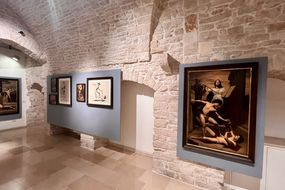
From 10 October to 29 November 2026
Colpevole. Allegorie della condizione umana
Michele de Napoli Art Gallery, Terlizzi
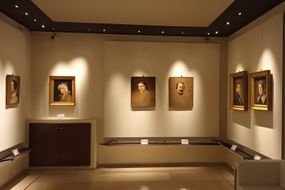
From 24 July to 31 December 2026
Michele de Napoli: from "Lion of the Academy" to Genius loci
Michele de Napoli Art Gallery, Terlizzi
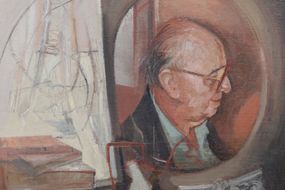
From 3 October to 1 November 2026
FRANCESCO DE BARTOLOMEIS. WITH ARTISTS AND ART.
House of the Green Count, Rivoli
From 29 April to 1 November 2026
Portia Zvavahera
Memmo Foundation, Rome

Artsupp Card: museum ticket + free exhibitions